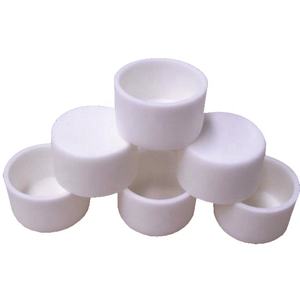
In industries where extreme temperatures, chemical exposure, and mechanical stress and anxiety assemble, average products falter while engineered remedies grow. The Alumina Ceramic Cooking Recipe stands for a course of sophisticated porcelains that transcends residential images to come to be a vital component in high-performance laboratories, aerospace testing gears, metallurgical processing, and products study. Crafted from high-purity aluminum oxide, this recipe embodies the marriage of ceramic scientific research and precision production, supplying unrivaled thermal security, chemical inertness, and dimensional consistency. Its role is not to serve meals but to allow reproducible experiments, managed thermal cycles, and reputable control in penalizing settings. Understanding the Alumina Ceramic Baking Meal exposes how worldly advancement empowers progress across sectors that shape our technical landscape.
1. The Material Structures of Alumina Porcelain Baking Dish
(Alumina Ceramic Baking Dish)
At the heart of the Alumina Porcelain Cooking Dish exists aluminum oxide, a ceramic differentiated by extraordinary firmness, electrical insulation, and refractory ability. In its sintered kind, alumina achieves a stiff crystalline framework efficient in withstanding continuous operation over 1500 levels celsius without softening or warping. This thermal endurance develops from solid ionic bonds within the crystal latticework, which withstand disturbance also under quick home heating or air conditioning. Industrial-grade Alumina Ceramic Cooking Cuisines generally contain pureness levels from 92 to 99.9 percent light weight aluminum oxide, with small additives such as silica or magnesium oxide presented to promote sintering and control microstructure. These carefully picked make-ups determine crucial properties consisting of fracture strength, thermal shock resistance, and resistance to hostile chemicals. Unlike steels, which carry out warmth and electricity conveniently, alumina functions as an insulator, making the meal ideal for applications requiring electric seclusion along with thermal performance. Its chemically inert nature makes certain that even when revealed to corrosive acids, liquified salts, or responsive gases, the Alumina Ceramic Cooking Meal will neither break down nor infect the refined product. This structure of durable physical and chemical characteristics describes why the dish is a relied on asset in environments where failing is not an option.
2. Design the Alumina Porcelain Cooking Dish Through Accuracy Production
Creating an Alumina Porcelain Cooking Recipe appropriate for innovative industrial use is a multi-stage procedure demanding specific control. It begins with ultra-fine powder prep work, where raw alumina is milled to submicron bit dimension and combined with sintering help to ensure uniform circulation. Forming methods vary with geometry and batch size; pass away pressing offers effectiveness for simple kinds, while isostatic pushing applies uniform stress for complicated shapes, and slip spreading allows detailed layouts via liquid slurry deposition into permeable molds. When formed, the green body is dried out gradually to avoid breaking before getting in a high-temperature heater. Sintering happens at temperatures typically between 1500 and 1700 levels celsius, where atomic diffusion integrates particles into a thick matrix. Most importantly, the heating and cooling prices are programmed to reduce thermal slopes that might induce anxieties resulting in fractures. After sintering, machining processes such as ruby grinding improve measurements and surface finishes to micron-level tolerances. Some variants receive a glasslike polish to secure pores and enhance resistance to liquid penetration, while others stay unglazed to make the most of chemical resistance and thermal emissivity. Each Alumina Ceramic Baking Recipe thus emerges as a product of firmly managed scientific research and skill, all set to do dependably in extensive setups.
3. Harnessing Thermal Behavior for Controlled Industrial Processes
Thermal administration is commonly the decisive consider premium material testing and processing, and the Alumina Porcelain Cooking Recipe succeeds through its well balanced warmth action. Its moderate thermal conductivity permits gradual, uniform energy absorption, staying clear of local overheating that can change example residential or commercial properties or alter dimension data. All at once, its high volumetric heat capacity indicates it stores considerable thermal power, aiding keep secure temperatures despite brief ecological fluctuations. This property verifies vital in procedures such as regulated atmosphere sintering, catalyst activation researches, and thermal slope analysis, where also minor variants can compromise end results. The low coefficient of thermal expansion of alumina confers exceptional resistance to thermal shock, allowing the Alumina Porcelain Baking Recipe to withstand quick shifts from ambient to severe temperature levels without breaking. In laboratory simulations of burning atmospheres, aerospace thermal biking examinations, and metallurgical heat treatment trials, the recipe works as a secure platform that shields both specimen and instrumentation. Engineers rely upon its predictable efficiency to design repeatable experiments and range processes from benchtop to pilot plant with confidence.
4. Chemical Inertness and Security in Demanding Applications
Industries ranging from semiconductor construction to nuclear study need vessels that will not introduce contaminants or respond with unsafe compounds. The Alumina Porcelain Cooking Meal fulfills this requirement with near-total chemical inertness across a broad pH array and in the existence of solvents, acids, and responsive intermediates. This non-reactivity safeguards both the stability of experimental samples and the safety and security of workers managing them. High-purity alumina is categorized as biocompatible and food-contact safe in controlled contexts, but in commercial circumstances its importance lies in preventing unintended chemical interactions that can mask real product actions or create toxic byproducts. The surface of the dish can be engineered to withstand bond of liquified steels or viscous polymers, easing post-process cleanup and decreasing cross-contamination dangers. Incorporated with its electrical protecting properties, the Alumina Porcelain Cooking Recipe allows secure handling of charged samplings and operation in high-voltage screening rigs. These characteristics make it important where logical precision and ecological safety and security are paramount.
5. Varied Industrial Roles of Alumina Ceramic Cooking Recipe
Far from a single-purpose product, the Alumina Porcelain Baking Meal locates application throughout numerous areas that share a requirement for high-temperature security and chemical resistance. In products research study, it works as a crucible and provider for sintering powders, expanding solitary crystals, and annealing alloys under controlled atmospheres. Aerospace engineers employ it in screening elements versus oxidative and thermal extremes, imitating trip reentry or engine exhaust conditions. Metallurgists use it for holding liquified non-ferrous metals and salts where steel or graphite would certainly fall short. In the energy field, it supports strong oxide fuel cell study and battery material synthesis, supplying a neutral setting for delicate chemistries. Quality assurance laboratories rely upon its harmony to produce similar outcomes throughout batches of tests. Even in arising locations like additive production of porcelains and compounds, the Alumina Ceramic Baking Recipe works as a develop system or debinding container, demonstrating versatility that bridges conventional and frontier innovations. Its mechanical rigidness and dimensional precision allow precise positioning within heaters and reactors, promoting automation and high-throughput process.
6. Connecting Material Performance to Operational Dependability
Choosing the Alumina Porcelain Cooking Meal for an industrial procedure is a choice rooted in reliability. Its resistance to creep– the tendency of materials to deform under lots at heat– makes certain that geometry continues to be consistent over long direct exposures, maintaining procedure uniformity. Wear resistance comes from its severe firmness, which lessens erosion when rough powders or granules are processed. Fatigue toughness allows repeated thermal biking without accumulating damages, decreasing lifecycle prices and downtime. For manufacturers, this converts right into less disturbances, tighter quality control, and expanded service intervals. When incorporated right into confirmed procedures, the Alumina Ceramic Cooking Recipe ends up being a quiet guarantor of reproducibility, a crucial feature in study and manufacturing alike. Its ability to execute identically throughout various facilities enhances collaboration and standardization in worldwide industries.
7. Progressing Alumina Porcelain Baking Dish for Next-Generation Needs
( Alumina Ceramic Baking Dish)
Innovation continues to press the abilities of the Alumina Ceramic Cooking Dish toward brand-new frontiers. Researchers are creating nano-structured alumina compounds that boost durability while retaining high-temperature performance, minimizing the risk of fragile crack popular operations. Hybrid designs integrating various other sophisticated porcelains such as zirconia or silicon carbide prolong applicability to a lot more destructive or mechanically extreme settings. Additive manufacturing techniques now allow intricate recipe geometries that optimize warmth circulation patterns for particular processes. Initiatives to reduced sintering temperature levels via advanced powder processing and alternative binders intend to decrease energy intake and environmental influence. Integration with sensing unit systems can make it possible for real-time tracking of thermal and chemical conditions inside the dish, feeding data right into automatic process controls. As markets pursue higher performance, cleaner production, and extra accurate testing, the Alumina Porcelain Baking Dish will evolve as a smarter, greener, and more durable enabler of technological improvement.
TRUNNANO chief executive officer Roger Luo stated:”The Alumina Ceramic Cooking Recipe will progressively merge high-performance ceramic science with intelligent layout to drive precision, toughness, and sustainability in the most demanding commercial and study applications.”
8. Vendor
Alumina Technology Co., Ltd focus on the research and development, production and sales of aluminum oxide powder, aluminum oxide products, aluminum oxide crucible, etc., serving the electronics, ceramics, chemical and other industries. Since its establishment in 2005, the company has been committed to providing customers with the best products and services. If you are looking for high quality alumina silica refractory, please feel free to contact us.
Tags: Alumina Ceramic Baking Dish, Alumina Ceramics, alumina
All articles and pictures are from the Internet. If there are any copyright issues, please contact us in time to delete.
Inquiry us